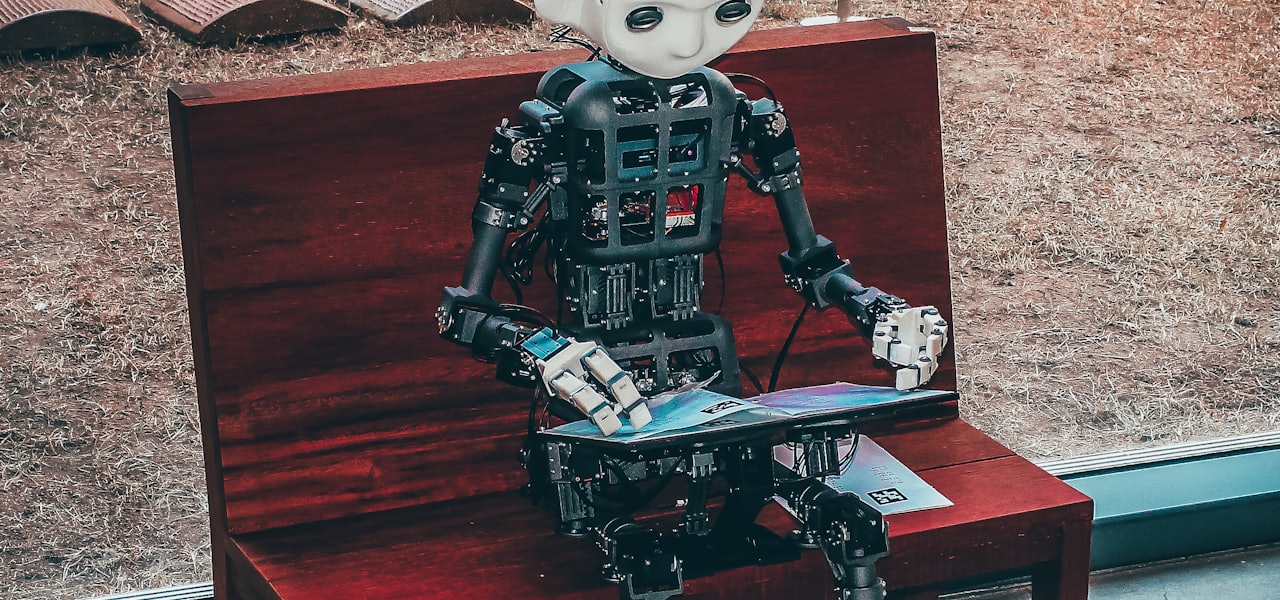
Emotion-sensitive software (ESS) is software specifically designed to target and monitor emotional response in a human being. Some software measures anger by comparing the pitch of a voice to a regular, or calm, pitch. Another approach is the measurement of physical appearance. If a camera or similar recording device picks up a certain amount of red pigmentation in the skin the system can be alerted that this person is angered. The competitive landscape in the Electronic Surveillance Software (ESS) industry is marked by a high level of secrecy regarding the operational details of these software systems. Many producers deliberately withhold information about the inner workings of their ESS products, a strategy that serves dual purposes: firstly, it intensifies competition among companies in the sector, as each strives to maintain a unique edge without revealing trade secrets that could be leveraged by competitors; secondly, this secrecy acts as a deterrent against individuals or entities who might try to circumvent the surveillance mechanisms. One application of ESS was developed by University of Notre Dame Assistant Professor of Psychology Sidney D'Mello, Art Graesser from the University of Memphis and a colleague from Massachusetts Institute of Technology. They used the technology to create an electronic tutor that could assess a student's level of boredom and frustration based on facial expression and body language, and react accordingly.
Convolution
In mathematics (in particular, functional analysis), convolution is a mathematical operation on two functions f {\displaystyle f} and g {\displaystyle g} that produces a third function f ∗ g {\displaystyle fg} , as the integral of the product of the two functions after one is reflected about the y-axis and shifted. The term convolution refers to both the resulting function and to the process of computing it. The integral is evaluated for all values of shift, producing the convolution function. The choice of which function is reflected and shifted before the integral does not change the integral result (see commutativity). Graphically, it expresses how the 'shape' of one function is modified by the other. Some features of convolution are similar to cross-correlation: for real-valued functions, of a continuous or discrete variable, convolution f ∗ g {\displaystyle fg} differs from cross-correlation f ⋆ g {\displaystyle f\star g} only in that either f ( x ) {\displaystyle f(x)} or g ( x ) {\displaystyle g(x)} is reflected about the y-axis in convolution; thus it is a cross-correlation of g ( − x ) {\displaystyle g(-x)} and f ( x ) {\displaystyle f(x)} , or f ( − x ) {\displaystyle f(-x)} and g ( x ) {\displaystyle g(x)} . For complex-valued functions, the cross-correlation operator is the adjoint of the convolution operator. Convolution has applications that include probability, statistics, acoustics, spectroscopy, signal processing and image processing, computer vision and human vision, geophysics, engineering, physics, and differential equations. The convolution can be defined for functions on Euclidean space and other groups (as algebraic structures). For example, periodic functions, such as the discrete-time Fourier transform, can be defined on a circle and convolved by periodic convolution. (See row 18 at DTFT § Properties.) A discrete convolution can be defined for functions on the set of integers. Generalizations of convolution have applications in the field of numerical analysis and numerical linear algebra, and in the design and implementation of finite impulse response filters in signal processing. Computing the inverse of the convolution operation is known as deconvolution. == Definition == The convolution of f {\displaystyle f} and g {\displaystyle g} is written f ∗ g {\displaystyle fg} , denoting the operator with the symbol ∗ {\displaystyle } . It is defined as the integral of the product of the two functions after one is reflected about the y-axis and shifted. As such, it is a particular kind of integral transform: ( f ∗ g ) ( t ) := ∫ − ∞ ∞ f ( τ ) g ( t − τ ) d τ . {\displaystyle (fg)(t):=\int _{-\infty }^{\infty }f(\tau )g(t-\tau )\,d\tau .} An equivalent definition is (see commutativity): ( f ∗ g ) ( t ) := ∫ − ∞ ∞ f ( t − τ ) g ( τ ) d τ . {\displaystyle (fg)(t):=\int _{-\infty }^{\infty }f(t-\tau )g(\tau )\,d\tau .} While the symbol t {\displaystyle t} is used above, it need not represent the time domain. At each t {\displaystyle t} , the convolution formula can be described as the area under the function f ( τ ) {\displaystyle f(\tau )} weighted by the function g ( − τ ) {\displaystyle g(-\tau )} shifted by the amount t {\displaystyle t} . As t {\displaystyle t} changes, the weighting function g ( t − τ ) {\displaystyle g(t-\tau )} emphasizes different parts of the input function f ( τ ) {\displaystyle f(\tau )} ; If t {\displaystyle t} is a positive value, then g ( t − τ ) {\displaystyle g(t-\tau )} is equal to g ( − τ ) {\displaystyle g(-\tau )} that slides or is shifted along the τ {\displaystyle \tau } -axis toward the right (toward + ∞ {\displaystyle +\infty } ) by the amount of t {\displaystyle t} , while if t {\displaystyle t} is a negative value, then g ( t − τ ) {\displaystyle g(t-\tau )} is equal to g ( − τ ) {\displaystyle g(-\tau )} that slides or is shifted toward the left (toward − ∞ {\displaystyle -\infty } ) by the amount of | t | {\displaystyle |t|} . For functions f {\displaystyle f} , g {\displaystyle g} supported on only [ 0 , ∞ ) {\displaystyle [0,\infty )} (i.e., zero for negative arguments), the integration limits can be truncated, resulting in: ( f ∗ g ) ( t ) = ∫ 0 t f ( τ ) g ( t − τ ) d τ for f , g : [ 0 , ∞ ) → R . {\displaystyle (fg)(t)=\int _{0}^{t}f(\tau )g(t-\tau )\,d\tau \quad \ {\text{for }}f,g:[0,\infty )\to \mathbb {R} .} For the multi-dimensional formulation of convolution, see domain of definition (below). === Notation === A common engineering notational convention is: f ( t ) ∗ g ( t ) := ∫ − ∞ ∞ f ( τ ) g ( t − τ ) d τ ⏟ ( f ∗ g ) ( t ) , {\displaystyle f(t)g(t)\mathrel {:=} \underbrace {\int _{-\infty }^{\infty }f(\tau )g(t-\tau )\,d\tau } _{(fg)(t)},} which has to be interpreted carefully to avoid confusion. For instance, f ( t ) ∗ g ( t − t 0 ) {\displaystyle f(t)g(t-t_{0})} is equivalent to ( f ∗ g ) ( t − t 0 ) {\displaystyle (fg)(t-t_{0})} , but f ( t − t 0 ) ∗ g ( t − t 0 ) {\displaystyle f(t-t_{0})g(t-t_{0})} is in fact equivalent to ( f ∗ g ) ( t − 2 t 0 ) {\displaystyle (fg)(t-2t_{0})} . === Relations with other transforms === Given two functions f ( t ) {\displaystyle f(t)} and g ( t ) {\displaystyle g(t)} with bilateral Laplace transforms (two-sided Laplace transform) F ( s ) = ∫ − ∞ ∞ e − s u f ( u ) d u {\displaystyle F(s)=\int _{-\infty }^{\infty }e^{-su}\ f(u)\ {\text{d}}u} and G ( s ) = ∫ − ∞ ∞ e − s v g ( v ) d v {\displaystyle G(s)=\int _{-\infty }^{\infty }e^{-sv}\ g(v)\ {\text{d}}v} respectively, the convolution operation ( f ∗ g ) ( t ) {\displaystyle (fg)(t)} can be defined as the inverse Laplace transform of the product of F ( s ) {\displaystyle F(s)} and G ( s ) {\displaystyle G(s)} . More precisely, F ( s ) ⋅ G ( s ) = ∫ − ∞ ∞ e − s u f ( u ) d u ⋅ ∫ − ∞ ∞ e − s v g ( v ) d v = ∫ − ∞ ∞ ∫ − ∞ ∞ e − s ( u + v ) f ( u ) g ( v ) d u d v {\displaystyle {\begin{aligned}F(s)\cdot G(s)&=\int _{-\infty }^{\infty }e^{-su}\ f(u)\ {\text{d}}u\cdot \int _{-\infty }^{\infty }e^{-sv}\ g(v)\ {\text{d}}v\\&=\int _{-\infty }^{\infty }\int _{-\infty }^{\infty }e^{-s(u+v)}\ f(u)\ g(v)\ {\text{d}}u\ {\text{d}}v\end{aligned}}} Let t = u + v {\displaystyle t=u+v} , then F ( s ) ⋅ G ( s ) = ∫ − ∞ ∞ ∫ − ∞ ∞ e − s t f ( u ) g ( t − u ) d u d t = ∫ − ∞ ∞ e − s t ∫ − ∞ ∞ f ( u ) g ( t − u ) d u ⏟ ( f ∗ g ) ( t ) d t = ∫ − ∞ ∞ e − s t ( f ∗ g ) ( t ) d t . {\displaystyle {\begin{aligned}F(s)\cdot G(s)&=\int _{-\infty }^{\infty }\int _{-\infty }^{\infty }e^{-st}\ f(u)\ g(t-u)\ {\text{d}}u\ {\text{d}}t\\&=\int _{-\infty }^{\infty }e^{-st}\underbrace {\int _{-\infty }^{\infty }f(u)\ g(t-u)\ {\text{d}}u} _{(fg)(t)}\ {\text{d}}t\\&=\int _{-\infty }^{\infty }e^{-st}(fg)(t)\ {\text{d}}t.\end{aligned}}} Note that F ( s ) ⋅ G ( s ) {\displaystyle F(s)\cdot G(s)} is the bilateral Laplace transform of ( f ∗ g ) ( t ) {\displaystyle (fg)(t)} . A similar derivation can be done using the unilateral Laplace transform (one-sided Laplace transform). The convolution operation also describes the output (in terms of the input) of an important class of operations known as linear time-invariant (LTI). See LTI system theory for a derivation of convolution as the result of LTI constraints. In terms of the Fourier transforms of the input and output of an LTI operation, no new frequency components are created. The existing ones are only modified (amplitude and/or phase). In other words, the output transform is the pointwise product of the input transform with a third transform (known as a transfer function). See Convolution theorem for a derivation of that property of convolution. Conversely, convolution can be derived as the inverse Fourier transform of the pointwise product of two Fourier transforms. == Visual explanation == == Historical developments == One of the earliest uses of the convolution integral appeared in D'Alembert's derivation of Taylor's theorem in Recherches sur différents points importants du système du monde, published in 1754. Also, an expression of the type: ∫ f ( u ) ⋅ g ( x − u ) d u {\displaystyle \int f(u)\cdot g(x-u)\,du} is used by Sylvestre François Lacroix on page 505 of his book entitled Treatise on differences and series, which is the last of 3 volumes of the encyclopedic series: Traité du calcul différentiel et du calcul intégral, Chez Courcier, Paris, 1797–1800. Soon thereafter, convolution operations appear in the works of Pierre Simon Laplace, Jean-Baptiste Joseph Fourier, Siméon Denis Poisson, and others. The term itself did not come into wide use until the 1950s or 1960s. Prior to that it was sometimes known as Faltung (which means folding in German), composition product, superposition integral, and Carson's integral. Yet it appears as early as 1903, though the definition is rather unfamiliar in older uses. The operation: ∫ 0 t φ ( s ) ψ ( t − s ) d s , 0 ≤ t < ∞ , {\displaystyle \int _{0}^{t}\varphi (s)\psi (t-s)\,ds,\quad 0\leq t<\infty ,} is a particular case of composition products considered by the Italian mathematician Vito Volterra in 1913. == Circular c
PropBank
PropBank is a corpus that is annotated with verbal propositions and their arguments—a "proposition bank". Although "PropBank" refers to a specific corpus produced by Martha Palmer et al., the term propbank is also coming to be used as a common noun referring to any corpus that has been annotated with propositions and their arguments. The PropBank project has played a role in research in natural language processing, and has been used in semantic role labelling. == Comparison == PropBank differs from FrameNet, the resource to which it is most frequently compared, in several ways. PropBank is a verb-oriented resource, while FrameNet is centered on the more abstract notion of frames, which generalizes descriptions across similar verbs (e.g. "describe" and "characterize") as well as nouns and other words (e.g. "description"). PropBank does not annotate events or states of affairs described using nouns. PropBank commits to annotating all verbs in a corpus, whereas the FrameNet project chooses sets of example sentences from a large corpus and only in a few cases has annotated longer continuous stretches of text. PropBank-style annotations often remain close to the syntactic level, while FrameNet-style annotations are sometimes more semantically motivated. From the start, PropBank was developed with the idea of serving as training data for machine learning-based semantic role labeling systems in mind. It requires that all arguments to a verb be syntactic constituents and different senses of a word are only distinguished if the differences bear on the arguments. Due to such differences, semantic role labeling with respect to PropBank is often a somewhat easier task than producing FrameNet-style annotations.
Scale space
Scale-space theory is a framework for multi-scale signal representation developed by the computer vision, image processing and signal processing communities with complementary motivations from physics and biological vision. It is a formal theory for handling image structures at different scales, by representing an image as a one-parameter family of smoothed images, the scale-space representation, parametrized by the size of the smoothing kernel used for suppressing fine-scale structures. The parameter t {\displaystyle t} in this family is referred to as the scale parameter, with the interpretation that image structures of spatial size smaller than about t {\displaystyle {\sqrt {t}}} have largely been smoothed away in the scale-space level at scale t {\displaystyle t} . The main type of scale space is the linear (Gaussian) scale space, which has wide applicability as well as the attractive property of being possible to derive from a small set of scale-space axioms. The corresponding scale-space framework encompasses a theory for Gaussian derivative operators, which can be used as a basis for expressing a large class of visual operations for computerized systems that process visual information. This framework also allows visual operations to be made scale invariant, which is necessary for dealing with the size variations that may occur in image data, because real-world objects may be of different sizes and in addition the distance between the object and the camera may be unknown and may vary depending on the circumstances. == Definition == The notion of scale space applies to signals of arbitrary numbers of variables. The most common case in the literature applies to two-dimensional images, which is what is presented here. Consider a given image f {\displaystyle f} where f ( x , y ) {\displaystyle f(x,y)} is the greyscale value of the pixel at position ( x , y ) {\displaystyle (x,y)} . The linear (Gaussian) scale-space representation of f {\displaystyle f} is a family of derived signals L ( x , y ; t ) {\displaystyle L(x,y;t)} defined by the convolution of f ( x , y ) {\displaystyle f(x,y)} with the two-dimensional Gaussian kernel g ( x , y ; t ) = 1 2 π t e − ( x 2 + y 2 ) / 2 t {\displaystyle g(x,y;t)={\frac {1}{2\pi t}}e^{-(x^{2}+y^{2})/2t}\,} such that L ( ⋅ , ⋅ ; t ) = g ( ⋅ , ⋅ ; t ) ∗ f ( ⋅ , ⋅ ) , {\displaystyle L(\cdot ,\cdot ;t)\ =g(\cdot ,\cdot ;t)f(\cdot ,\cdot ),} where the semicolon in the argument of L {\displaystyle L} implies that the convolution is performed only over the variables x , y {\displaystyle x,y} , while the scale parameter t {\displaystyle t} after the semicolon just indicates which scale level is being defined. This definition of L {\displaystyle L} works for a continuum of scales t ≥ 0 {\displaystyle t\geq 0} , but typically only a finite discrete set of levels in the scale-space representation would be actually considered. The scale parameter t = σ 2 {\displaystyle t=\sigma ^{2}} is the variance of the Gaussian filter and as a limit for t = 0 {\displaystyle t=0} the filter g {\displaystyle g} becomes an impulse function such that L ( x , y ; 0 ) = f ( x , y ) , {\displaystyle L(x,y;0)=f(x,y),} that is, the scale-space representation at scale level t = 0 {\displaystyle t=0} is the image f {\displaystyle f} itself. As t {\displaystyle t} increases, L {\displaystyle L} is the result of smoothing f {\displaystyle f} with a larger and larger filter, thereby removing more and more of the details that the image contains. Since the standard deviation of the filter is σ = t {\displaystyle \sigma ={\sqrt {t}}} , details that are significantly smaller than this value are to a large extent removed from the image at scale parameter t {\displaystyle t} , see the following figures and for graphical illustrations. === Why a Gaussian filter? === When faced with the task of generating a multi-scale representation one may ask: could any filter g of low-pass type and with a parameter t which determines its width be used to generate a scale space? The answer is no, as it is of crucial importance that the smoothing filter does not introduce new spurious structures at coarse scales that do not correspond to simplifications of corresponding structures at finer scales. In the scale-space literature, a number of different ways have been expressed to formulate this criterion in precise mathematical terms. The conclusion from several different axiomatic derivations that have been presented is that the Gaussian scale space constitutes the canonical way to generate a linear scale space, based on the essential requirement that new structures must not be created when going from a fine scale to any coarser scale. Conditions, referred to as scale-space axioms, that have been used for deriving the uniqueness of the Gaussian kernel include linearity, shift invariance, semi-group structure, non-enhancement of local extrema, scale invariance and rotational invariance. In the works, the uniqueness claimed in the arguments based on scale invariance has been criticized, and alternative self-similar scale-space kernels have been proposed. The Gaussian kernel is, however, a unique choice according to the scale-space axiomatics based on causality or non-enhancement of local extrema. === Alternative definition === Equivalently, the scale-space family can be defined as the solution of the diffusion equation (for example in terms of the heat equation), ∂ t L = 1 2 ∇ 2 L , {\displaystyle \partial _{t}L={\frac {1}{2}}\nabla ^{2}L,} with initial condition L ( x , y ; 0 ) = f ( x , y ) {\displaystyle L(x,y;0)=f(x,y)} . This formulation of the scale-space representation L means that it is possible to interpret the intensity values of the image f as a "temperature distribution" in the image plane and that the process that generates the scale-space representation as a function of t corresponds to heat diffusion in the image plane over time t (assuming the thermal conductivity of the material equal to the arbitrarily chosen constant 1/2). Although this connection may appear superficial for a reader not familiar with differential equations, it is indeed the case that the main scale-space formulation in terms of non-enhancement of local extrema is expressed in terms of a sign condition on partial derivatives in the 2+1-D volume generated by the scale space, thus within the framework of partial differential equations. Furthermore, a detailed analysis of the discrete case shows that the diffusion equation provides a unifying link between continuous and discrete scale spaces, which also generalizes to nonlinear scale spaces, for example, using anisotropic diffusion. Hence, one may say that the primary way to generate a scale space is by the diffusion equation, and that the Gaussian kernel arises as the Green's function of this specific partial differential equation. == Motivations == The motivation for generating a scale-space representation of a given data set originates from the basic observation that real-world objects are composed of different structures at different scales. This implies that real-world objects, in contrast to idealized mathematical entities such as points or lines, may appear in different ways depending on the scale of observation. For example, the concept of a "tree" is appropriate at the scale of meters, while concepts such as leaves and molecules are more appropriate at finer scales. For a computer vision system analysing an unknown scene, there is no way to know a priori what scales are appropriate for describing the interesting structures in the image data. Hence, the only reasonable approach is to consider descriptions at multiple scales in order to be able to capture the unknown scale variations that may occur. Taken to the limit, a scale-space representation considers representations at all scales. Another motivation to the scale-space concept originates from the process of performing a physical measurement on real-world data. In order to extract any information from a measurement process, one has to apply operators of non-infinitesimal size to the data. In many branches of computer science and applied mathematics, the size of the measurement operator is disregarded in the theoretical modelling of a problem. The scale-space theory on the other hand explicitly incorporates the need for a non-infinitesimal size of the image operators as an integral part of any measurement as well as any other operation that depends on a real-world measurement. There is a close link between scale-space theory and biological vision. Many scale-space operations show a high degree of similarity with receptive field profiles recorded from the mammalian retina and the first stages in the visual cortex. In these respects, the scale-space framework can be seen as a theoretically well-founded paradigm for early vision, which in addition has been thoroughly tested by algorithms and experiments. == Gaussian derivatives == At any scale in scale space, we c
Concordancer
A concordancer is a computer program that automatically constructs a concordance—an alphabetised index of every occurrence of a word or phrase in a body of text, each entry displayed with its surrounding context. Concordancers are primary tools in corpus linguistics, lexicography, computer-assisted translation, and language teaching. The most common display format is the key word in context (KWIC) layout, in which each hit appears centred on a line with a fixed span of words to its left and right, enabling rapid scanning of usage patterns across many occurrences. == History == === Pre-computational concordances === The compilation of concordances predates computers by many centuries. Around 1230, the French Dominican cardinal Hugh of Saint-Cher directed a team of friars in assembling a concordance of the Latin Vulgate Bible, generally regarded as the first systematic concordance of any text. To help readers locate passages, Hugh divided each biblical chapter into lettered sections. Later milestones include a Hebrew Old Testament concordance compiled by Rabbi Mordecai Nathan (1448), Alexander Cruden's Complete Concordance to the Holy Scriptures (1737), and the manuscript Asaf ha-Mazkir, an unfinished concordance to the Babylonian Talmud compiled by Moses Rigotz around the turn of the 19th century. === First computer concordance === The first concordance produced with computing assistance was the Index Thomisticus, a comprehensive lexical index of the writings of and around Thomas Aquinas, totalling approximately 10.6 million Latin words. The Italian Jesuit priest Roberto Busa conceived the project in 1946 and secured the sponsorship of IBM in 1949 after a meeting with chairman Thomas J. Watson. Keypunch operators in Gallarate, Italy, encoded the texts onto punched cards from around 1950. IBM executive Paul Tasman developed the processing methods. The full 56-volume printed edition was completed around 1980, followed by a CD-ROM edition in 1989 and a web-accessible version in 2005. === The KWIC format === The key word in context (KWIC) display was formalised as a computational technique by Hans Peter Luhn, a researcher at IBM, in a 1960 paper in American Documentation. In KWIC output, each instance of the search term (the node word) is centred on a line with a fixed window of words to each side; sorting the resulting lines alphabetically by the immediately adjacent word reveals collocational and phraseological patterns at a glance. === COCOA === One of the first dedicated concordancing programs was COCOA (COunt and COncordance Generation on Atlas), created in 1965 by D. B. Russell at University College London and the Atlas Computer Laboratory in Harwell, Oxfordshire. Written in approximately 4,000 cards of FORTRAN, it processed text annotated with flat, non-hierarchical markup tags and could produce word counts and concordances in multiple languages. Within its first six months COCOA had been applied to texts in at least six languages. A second version designed for multiple mainframe platforms was distributed to British computing centres in the mid-1970s. Growing dissatisfaction with its interface and the eventual withdrawal of Atlas Laboratory support prompted British funding bodies to commission a successor program. === Oxford Concordance Program === The Oxford Concordance Program (OCP) was designed and written in FORTRAN by Susan Hockey and Ian Marriott at Oxford University Computing Services (OUCS) between 1979 and 1980 and first released in 1981. Hockey and Marriott acknowledged that OCP owed much to COCOA and the CLOC system at the University of Birmingham. OCP accepted COCOA-format markup to encode metadata such as author, act, scene, and line number, and was described by its authors as "a machine-independent text analysis program for producing word lists, indices and concordances in a variety of languages and alphabets." By the mid-1980s it had been licensed to approximately 240 institutions in 23 countries. A personal computer version, Micro-OCP, was developed for the IBM PC and sold by Oxford University Press from the late 1980s. Version 2 was rewritten in 1985–86 and documented in the same 1987 article by Hockey and co-author John Martin. === Personal computer era === The availability of affordable personal computers in the 1980s and 1990s enabled standalone concordancing applications that analysts could run locally without specialist computing facilities. MicroConcord, developed by Mike Scott and Tim Johns and published by Oxford University Press in 1993 for MS-DOS, was among the first concordancers designed specifically for classroom language teaching. WordSmith Tools, also developed by Mike Scott, was first released in 1996 and became one of the most widely used corpus analysis suites in academic linguistics research. Other tools from this era include TACT (University of Toronto, 1989), a suite of MS-DOS freeware programs for literary text analysis, and MonoConc, a Windows concordancer created by Michael Barlow. === Web-based concordancers === From the late 1990s onwards, web-based concordancers hosted on remote servers gave researchers browser access to large preloaded corpora without requiring local storage or processing. The Sketch Engine, developed by Adam Kilgarriff and Pavel Rychlý (Masaryk University), was launched commercially in July 2003 by Lexical Computing Limited and introduced word sketches—automatically generated one-page profiles of a word's typical grammatical relations and collocations. AntConc, created by Laurence Anthony at Waseda University, Tokyo, was first released in 2002 as freeware for Windows, macOS, and Linux. == Features == Modern concordancers typically offer a range of analytical functions beyond basic KWIC display. These commonly include: KWIC display with the node word centred and context words in aligned columns, sortable by the word one, two, or three positions to the left or right of the node (L1–L3 and R1–R3) Concordance plots, visualising the distribution of hits as marks along a scaled bar representing each text in the corpus Frequency and word lists, both alphabetical and ranked by frequency Collocation statistics, identifying words that co-occur with the search term more often than chance, quantified by measures such as mutual information, the t-score, or log-likelihood Keyword analysis, comparing word frequencies between a study corpus and a reference corpus to identify statistically distinctive items N-gram analysis, finding frequently recurring word sequences of a specified length Part-of-speech tagging integration, allowing searches filtered to particular grammatical categories Unicode support for multilingual text Bilingual and parallel concordancers additionally display aligned text in two or more languages side by side, enabling comparison of translation equivalents across language pairs. == Notable concordancers == === WordSmith Tools === Created by Mike Scott and first released in 1996, WordSmith Tools is a Windows corpus analysis suite that evolved from MicroConcord. Its three core modules are Concord (KWIC concordances), WordList (frequency and alphabetical word lists), and Keywords (statistical keyword identification relative to a reference corpus). Oxford University Press used WordSmith Tools for dictionary preparation work. Version 4.0 is freely available; later versions are sold by Lexical Analysis Software Limited. === AntConc === AntConc is a freeware, multiplatform concordancing toolkit created by Laurence Anthony, Professor of Applied Linguistics at Waseda University, Tokyo. First released in 2002 and formally described in a 2005 academic paper, it runs on Windows, macOS, and Linux. Its tools include a KWIC concordancer, a concordance plot for visualising distribution across texts, a collocates tool, a keyword list, and an n-gram analysis module. Because it is free and requires only plain text files, AntConc is widely used in linguistics courses and independent research worldwide. === Sketch Engine === The Sketch Engine is a corpus management and query system co-created by Adam Kilgarriff and Pavel Rychlý and launched in 2003 by Lexical Computing Limited. It provides browser-based access to over 800 corpora in more than 100 languages. Beyond concordance searching, it offers word sketches, collocation analysis, distributional thesaurus construction, keyword and terminology extraction, and diachronic analysis. It is used by major publishers including Macmillan and Oxford University Press for lexicographic research. A subset tool, SKELL (Sketch Engine for Language Learning), is freely accessible to individual learners. === Wmatrix === Wmatrix is a web-based corpus processing environment developed by Paul Rayson at the University Centre for Computer Corpus Research on Language (UCREL), Lancaster University. Alongside concordances and frequency lists, Wmatrix integrates CLAWS part-of-speech tagging and the USAS semantic tagger, enabling keyword analysis simultane
Hugging Face
Hugging Face, Inc., is an American company based in New York City that develops computation tools for building applications using machine learning. Its transformers library built for natural language processing applications and its platform allow users to share machine learning models and datasets and showcase their work. == History == === Founding === The company was founded in 2016 by French entrepreneurs Clément Delangue, Julien Chaumond, and Thomas Wolf in New York City, originally as a company that developed a chatbot app targeted at teenagers. The company was named after the U+1F917 🤗 HUGGING FACE emoji. After open sourcing the model behind the chatbot, the company pivoted to focus on being a platform for machine learning. === AI boom === On April 28, 2021, the company launched the BigScience Research Workshop in collaboration with several other research groups to release an open large language model. In 2022, the workshop concluded with the announcement of BLOOM, a multilingual large language model with 176 billion parameters. In February 2023, the company announced partnership with Amazon Web Services (AWS) which would allow Hugging Face's products to be available to AWS customers to use them as the building blocks for their custom applications. The company also said the next generation of BLOOM will be run on Trainium, a proprietary machine learning chip created by AWS. In June 2024, the company announced, along with Meta and Scaleway, their launch of a new AI accelerator program for European startups. The initiative aimed to help startups integrate open foundation models into their products, accelerating the EU AI ecosystem. The program, based at STATION F in Paris, ran from September 2024 to February 2025. Selected startups received mentoring, and access to AI models and tools and Scaleway's computing power. On September 23, 2024, to further the International Decade of Indigenous Languages, Hugging Face teamed up with Meta and UNESCO to launch a new online language translator. It was built on Meta's No Language Left Behind open-source AI model, enabling free text translation across 200 languages, including many low-resource languages. In April 2025, Hugging Face announced that they acquired a humanoid robotics startup, Pollen Robotics, based in France and founded by Matthieu Lapeyre and Pierre Rouanet in 2016. In an X tweet, Delangue shared his vision to "make Artificial Intelligence robotics Open Source". === Cyberattacks === In early 2026, hackers hijacked the Hugging Face platform to launch Android-targeted attacks involving "powerful malware" which could completely take over a compromised target.
Speculative decoding
Speculative decoding is an inference-time optimization for autoregressive large language models (LLMs) that generates multiple tokens per decoding step instead of one. A smaller draft model proposes a sequence of candidate tokens, and the larger target model verifies them in a single forward pass through a modified rejection sampling scheme. The verification preserves the target model's original output distribution, so the technique produces the same results as standard decoding while cutting latency by roughly two to three times. The name is an analogy to speculative execution in CPU design, where a processor runs instructions along a predicted branch before the outcome is known. == Background == Standard autoregressive decoding in large language models generates one token at a time. The model computes a probability distribution over its vocabulary, samples the next token, and feeds that token back as input. For large models, this process is bottlenecked by memory bandwidth rather than arithmetic throughput: loading the model's parameters from high-bandwidth memory (HBM) to the processor takes up most of the wall-clock time at each step. Because of this, a forward pass over one token and a forward pass over several tokens in a batch take roughly the same time. Speculative decoding relies on this property. == Mechanism == The technique alternates between two phases: drafting and verification. During drafting, a fast approximation model generates a short run of K candidate tokens, typically between 3 and 12. The draft model is usually a much smaller version of the target model or a lightweight auxiliary network. During verification, the target model scores the entire draft sequence in one batched forward pass. A modified rejection sampling algorithm compares the draft and target probabilities at each position. If the target model would have been at least as likely to produce a given token, that token is accepted; the first token that fails is resampled from a corrected distribution, and everything after it is thrown out. The result is that the output distribution is the same as if each token had been generated one at a time. How many tokens get accepted per cycle depends on how well the draft model matches the target. For common words and predictable continuations the match tends to be good, so the target model can confirm several tokens at once. == History == An early precursor was blockwise parallel decoding, proposed in 2018 by Stern, Shazeer, and Uszkoreit. Their method predicted multiple future tokens through auxiliary prediction heads and validated them against the autoregressive model, but it only worked with greedy decoding and did not preserve the full sampling distribution. The modern form of the technique came from Yaniv Leviathan, Matan Kalman, and Yossi Matias at Google Research, who posted "Fast Inference from Transformers via Speculative Decoding" on arXiv in November 2022. Separately and at about the same time, Charlie Chen and colleagues at DeepMind arrived at a closely related method they called speculative sampling, published in February 2023. Both papers introduced the use of rejection sampling to guarantee that the output distribution is unchanged. Leviathan et al. showed roughly 2–3x speedup on T5-XXL (11 billion parameters); Chen et al. reported 2–2.5x on the Chinchilla model (70 billion parameters). The Leviathan et al. paper was presented as an oral at the International Conference on Machine Learning in July 2023. == Variants == SpecInfer (Miao et al., 2024) uses multiple small language models to jointly build a tree of candidate continuations rather than a single chain. The target model verifies the whole tree in parallel and keeps the longest valid path, with reported speedups of 1.5–3.5x. Medusa (Cai et al., 2024) takes a different approach by not using a separate draft model at all. Extra lightweight decoding heads are attached to the target model itself, and each one predicts a token at a different future position. The candidates are evaluated through a tree-structured attention mechanism. The authors measured 2.2–3.6x speedup. EAGLE (Li et al., 2024) performs autoregression on the target model's internal feature representations (specifically the second-to-top layer) rather than on tokens directly. On LLaMA 2 Chat 70B, this gave a 2.7–3.5x latency reduction. Later versions added dynamic draft trees (EAGLE-2) and further optimizations (EAGLE-3), reaching 3–6.5x speedup. == Adoption == By 2024, speculative decoding had become a standard part of production LLM serving. Google uses it in the AI Overviews feature of Google Search. Open-source inference frameworks such as vLLM, NVIDIA's TensorRT-LLM, and SGLang all include built-in support for speculative decoding and its variants. Apple, AWS, and Meta have also published research extending the method or deploying it at scale.